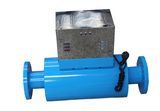
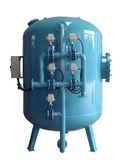
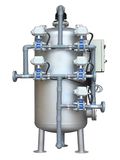
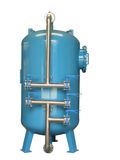
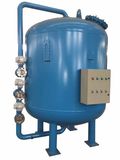
Product Specifications
| Prod Model: |
YL-ACF-2000 |
| Markets: |
North America,South America,Eastern Europe,Southeast Asia,Africa,Oceania,Mid East,Eastern Asia,Western Europe |
| Material For Filter Tank: |
Carbon Steel(Midl Steel), Ss304, Ss316, Ss2205 |
| Filtration Material: |
Quartz Sand, Active Carbon, Mn Sand, etc |
| Working Pressure: |
0.6/1.0MPa,1.6MPa |
| Pressure Loss: |
Less Than 0.02% |
| Working Temperature: |
No More Than 40 C |
| Water Flowing Speed: |
7 M/Hour, 10 --20 M/Hour |
| Water Output: |
<5 Ntu |
| Application Field: |
RO System, Water Treatment Plant |
| Function: |
Water Filter |
| Usage: |
Instrumentation Equipment |
| Operating Principle: |
Activated Carbon |
| Certification: |
GS |
| Water Temperature: |
Cold, Warm & Hot |
| Descaling Function: |
Descaling Function |
| Pipe Design Rate: |
Incremental |
| Style For Purifier: |
Ground Mounted |
| Water Purification Efficacy: |
Pre-Treatment Section for Pure Water/RO Water |
Product Description
Actived carbon filtration
Granular activated carbon (GAC) is commonly used for removing organic constituents and residual disinfectants in water supplies. This not only improves taste and minimizes health hazards; it protects other water treatment units such as reverse osmosis membranes and ion exchange resins from possible damage due to oxidation or organic fouling. Activated carbon is a favored water treatment technique because of its multifunctional nature and the fact that it adds nothing detrimental to the treated water.
Most activated carbons are made from raw materials such as nutshells, wood, coal and petroleum.
Typical surface area for activated carbon is approximately 1,000 square meters per gram (m2/gm). However, different raw materials
produce different types of activated carbon varying in hardness, density, pore and particle sizes, surface areas, extractables, ash and pH. These differences in properties make certain carbons preferable over others in different applications.
The two principal mechanisms by which activated carbon removes contaminants from water are adsorption and catalytic reduction. Organics are removed by adsorption and residual disinfectants are removed by catalytic reduction.
Actived carbon filter
Activated carbon filters are typically used to remove organic compounds and/or free chlorine from water to make water suitable for use in manufacturing or discharge. Removing organics like fulvic and humic acid from potable water prevents these acids from chemically reacting with chlorine to form a class of carcinogens known as trihalomethanes.
As with any water treatment method, activated carbon (AC) filtration is not suitable for removing every type of contaminant. AC filtration is not able to remove sodium, fluoride, microbes, or nitrates. AC filters also do not soften water. Only a specific type of activated carbon water treatment is able to remove heavy metals, such as lead, and this AC filter is typically only utilized in household point of-use filters.
Organic sources of activated carbon include coal (bituminous or anthracite) and coconut shells. Carbon is formed when the organic source is burned in an environment absent of oxygen, driving off heavy organic molecules and leaving about 30%of the original mass intact.. Next, the carbon must be "activated" for use in water treatment. The activation process further drives off unwanted molecules, as well as opens up the carbon's huge number of pores. These pores are what allow for contaminant absorption. The absorption rate of a surface area of just one pound of AC is equivalent to 60 to 150 acres!
| model | Filter diameter | Total height | water inlet-outlet | capacity | Active carbon material |
| mm | mm | mm | m³/hour | ton |
| YL-ACF-500 | 500 | 2350 | DN32 | 2 | 0.11 |
| YL-ACF-600 | 600 | 2380 | DN32 | 3 | 0.16 |
| YL-ACF-700 | 700 | 2400 | DN40 | 4 | 0.22 |
| YL-ACF-800 | 800 | 2400 | DN40 | 5 | 0.3 |
| YL-ACF-900 | 900 | 2500 | DN50 | 6 | 0.36 |
| YL-ACF-1000 | 1000 | 2600 | DN50 | 8 | 0.45 |
| YL-ACF-1200 | 1200 | 2700 | DN65 | 11 | 0.65 |
| YL-ACF-1400 | 1400 | 2800 | DN65 | 15 | 0.86 |
| YL-ACF-1500 | 1500 | 2850 | DN65 | 18 | 1 |
| YL-ACF-1600 | 1600 | 2900 | DN80 | 20 | 1.2 |
| YL-ACF-1800 | 1800 | 3000 | DN80 | 25 | 1.5 |
| YL-ACF-2000 | 2000 | 3100 | DN100 | 30 | 1.8 |
| YL-ACF-2200 | 2200 | 3180 | DN100 | 38 | 2.2 |
| YL-ACF-2400 | 2400 | 3330 | DN100 | 45 | 2.5 |
| YL-ACF-2500 | 2500 | 3380 | DN100 | 50 | 2.8 |
| YL-ACF-2600 | 2600 | 3430 | DN125 | 55 | 3 |
| YL-ACF-2800 | 2800 | 3530 | DN125 | 60 | 3.5 |
| YL-ACF-3000 | 3000 | 3630 | DN125 | 70-80 | 4 |
| YL-ACF-3200 | 3200 | 3730 | DN150 | 80-100 | 4.5 |
Residual disinfectants removalActivated carbon can remove and destroy residual disinfectants (chlorine and chloramine) through a catalytic reduction reaction. This is a chemical reaction that involves a transfer of electrons from the activated carbon surface to the residual disinfectant. In other words,
activated carbon acts as a reducing agent. Activated carbon's removal of chlorine reduces the chlorine to a non-oxidative chloride ion. The reaction is very fast and takes place in the first few inches of a new activated carbon bed. (Where removal of organics by activated carbon takes minutes, removal of chlorine literally takes seconds). The chlorine capacity of new activated carbon is 1 pound of chlorine per pound of carbon at a flow rate of 3 to 5 gpm/cu.ft. and a bed depth of 3 feet.Chloramine removal by activated carbon is a much slower reaction. The predominant species of chloramine in city water supplies (pH about 7 to 8) is monochloramine. The reaction with activated carbon and monochloramine also renders a non-oxidative chloride ion. Since the rate of reaction is considerably slower, the flow rate should be 0.5 gpm/cu.ft. and the bed depth greater than 3 feet.
Jiangsu YLD Water Processing Equipment Co., Ltd. is a high-tech enterprise, specialized in the research, development, design, manufacture, installation, technical consultation and personnel training.
We mainly produce electronic scale removal, UV sterilization, filtration, softening and cyclone grit removal technology and equipment. With strong technical force and rich experience, our company strictly implements ISO9001 system in the plan and management. "High technology leads to market development" is our basic concept.
We have extensively cooperated with domestic key universities, research institutions and foreign professional manufacturers, such as DOW (Dow) Chemical Co., Ltd., HYDRANAUTICS (Hydranautics) Company, Company (a professional manufacturer of multi-stage pumps), MILTONROY (Milton) Corporation (a metering pump manufacturer), the US Soft Controller KINETICO and OSMONICS, We have also fully introduced advanced technology. Thus, our technology is always in the leading domestic level. Over the years, our company has specialized in a variety of water treatment equipment for food, beverage, pharmaceutical, hospital, precision electronic, fine chemical, electricity, painting and surface cleaning industries.
Our "LYD" high-quality products at reasonable prices and perfect after-sales services have won great trust from worldwide customers,
We are willing to cooperate with the friends from all over the world and creat fine future together!